- Kashif Khan
- Posts
- 3 Warning Signs Hiding in Your Nails
3 Warning Signs Hiding in Your Nails
What your body is trying to tell you—if you know where to look

Kashif Khan
April 09, 2026
Your nails grow about 0.5% slower every year after your late 20s.
By 100, they're growing half as fast as they did in your prime.
But speed isn't the only thing that changes.
Your nails are constantly signaling what's happening inside your body.
Most people just never learned to read them.
Here are three things to check right now.
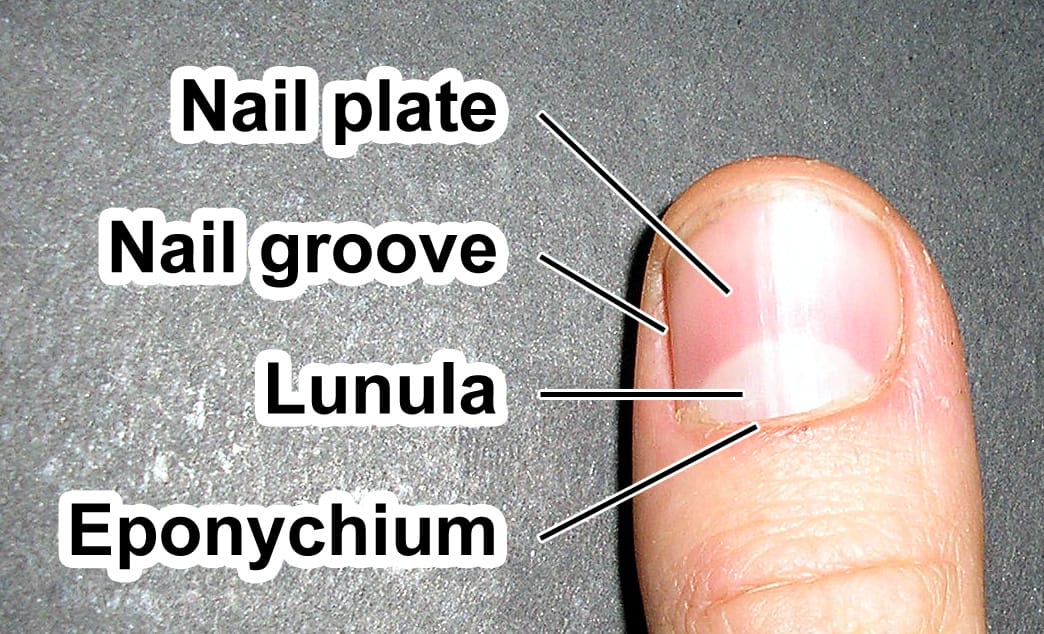
1. Your lunula, or half-moon (pictured above).
Look at your thumbnails.
See that pale crescent shape at the base?
That's called the lunula.
It should be visible, especially on your thumbs.
When it fades or vanishes, it means your nail matrix—the cells responsible for nail growth—is slowing down.
Your body isn't delivering enough oxygen and nutrients to support healthy regeneration.
A fading lunula is one of the earliest signs your metabolism is declining.
2. You have vertical ridges.
Run your finger across your nail.
Feel those little lines running from base to tip?
If they run deep, it might mean you have a nutrient deficiency.
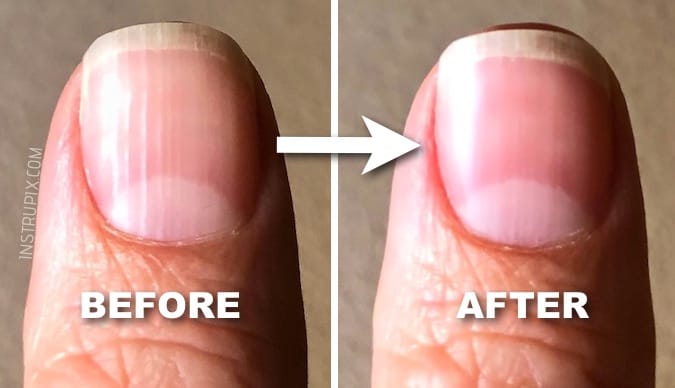
In one study of 100 elderly adults, 85% had developed these ridges.
Most had no idea.
The usual culprits are low iron, biotin, or magnesium. All of which are essential for keratin production.
If you've got ridges, your body is asking for something it's not getting.
3. Your nails are brittle and splitting.
Healthy nails bend slightly before breaking.
If yours crack, peel, or split with barely any pressure, something's off.
The most common causes are dehydration and nutrient deficiency.
Your nails are made of keratin—a protein that needs iron, biotin, and collagen to stay strong and flexible.
But there's another culprit most people miss: your thyroid.
Hypothyroidism slows everything down, including nail growth and repair.
Brittle nails are one of the earliest signs.
If yours have become weak and you're also dealing with fatigue, weight gain, or cold sensitivity, get your thyroid checked.
Other triggers include overexposure to water (washing dishes without gloves), harsh soaps, and acetone-based nail polish removers—all of which strip the natural oils that keep nails flexible.
If your nails break constantly, your body is asking for something it's not getting.
What to do about it?
Add collagen-rich bone broth for the amino acids your nails need.
Get biotin from pastured eggs.
Check your iron—but don't overdo it, because excess iron causes its own problems.
Warm your hands—even massaging them improves blood flow to the nail bed.
And if your nails have slowed dramatically or become brittle overnight, get your thyroid checked.
Hypothyroidism is one of the most common causes.
Your body is always communicating.
Your nails are one of the easiest places to listen.
Until next time,
Kashif Khan
These statements have not been evaluated by the Food and Drug Administration. This product is not intended to diagnose, treat, cure, or prevent any disease. Information on this site is provided for informational purposes only. It is not meant to substitute for medical advice from your physician or other medical professional. You should not use the information contained herein for diagnosing or treating a health problem or disease or prescribing any medication. If you have or suspect that you have a medical problem, promptly contact your regular healthcare provider.